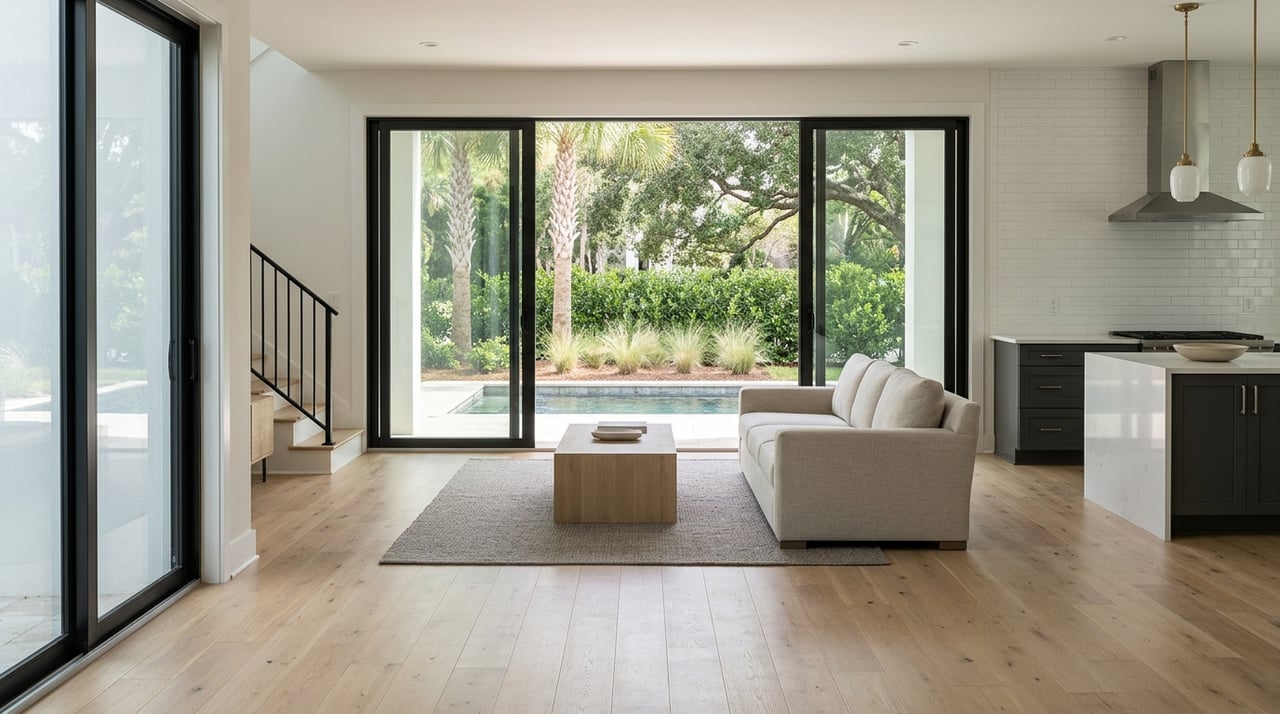
Daniel Island Waterfront Or Interior? How To Decide
May 21, 2026
May 21, 2026
Trying to choose between a waterfront home and an interior home on Daniel Island? You are not alone. For many buyers, this decision is less about which option is better and more about which lifestyle fits your daily routine, budget, and long-term plans. If you want to weigh the real tradeoffs clearly before you fall in love with a view or a floor plan, this guide will help you do exactly that. Let’s dive in.
Daniel Island gives you more than one version of Lowcountry living. Official community materials describe a 4,000-acre island community surrounded by 23 miles of rivers, creeks, and waterways, with more than 400 acres of parks and open greenspace, more than 25 miles of trails, downtown shops and restaurants, and a wide range of residential options.
That variety is a big reason this choice matters. On one side, you have homes shaped by shoreline access, marsh views, and boating culture. On the other, you have homes that may place you closer to downtown, parks, pools, trails, and everyday destinations.
Daniel Island is also a premium market. Recent sources show average or median pricing well above $1.4 million, with live inventory ranging from condos near the $500,000 mark to waterfront estates above $10 million.
Not every “waterfront” home offers the same experience. On Daniel Island, that label can describe true deepwater property, marsh-front homes, pond-front settings, or homes in a waterfront-oriented community.
That distinction matters because the lifestyle, privacy, price, and upkeep can vary a lot. A home with direct water access is a very different purchase from one that simply enjoys nearby views or community access.
For many buyers, waterfront living is about daily use, not just scenery. Daniel Island community materials highlight private and community docks, boat ramps, boating, fishing, and crabbing as core parts of island life.
The public side of that lifestyle is easy to see too. Daniel Island Waterfront Park sits on the Wando River and includes riverfront trails, a playground, and a fishing pier, while parts of the trail system run along marshes and the water’s edge.
If you picture mornings by the marsh, quick access to the water, or a home that feels deeply connected to the coastal setting, waterfront may be the right fit. For the right buyer, that daily experience can outweigh the extra costs.
Waterfront homes usually come with more variables than interior homes. Price differences are driven not just by the word “waterfront,” but by lot type, privacy, exposure, views, and whether the property offers meaningful access to the water.
There is also a narrower buyer pool when it comes time to sell. Waterfront homes often have strong emotional appeal, but they also require buyers who are comfortable with maintenance, flood considerations, and the realities of owning close to the shoreline.
Interior homes often trade direct shoreline exposure for convenience and simpler ownership. If your priority is a smoother daily routine, that trade can make a lot of sense.
Daniel Island’s downtown area is centrally located with shops, restaurants, and services. Community materials also note pools at Pierce Park, Scott Park, and Edgefield Park, giving interior buyers access to amenities without paying for direct water frontage.
Redfin gives Daniel Island a Walk Score of 19, so exact placement matters. If you want easier access to parks, trails, downtown, or your usual day-to-day route, interior location can be a major advantage.
That means one interior home may live very differently from another. A home near the village core or close to parks and trails may offer more practical value for your routine than a larger home tucked farther away.
Choosing interior does not mean giving up the Daniel Island lifestyle. You can still enjoy greenspace, parks, trails, pools, and the island’s overall coastal setting.
For many buyers, interior living is the sweet spot between lifestyle and cost control. You may give up direct water access, but gain easier upkeep and a more flexible budget.
One of the most important things to know is that Daniel Island does not have a single neat waterfront premium. Current listings show a very wide spread, from a waterfront-community condo around $524,000 to deepwater estates listed between roughly $10.49 million and $10.98 million.
Interior and amenity-adjacent options also cover a broad range, with examples from roughly $509,000 to $1.625 million. In other words, the decision is not simply expensive versus affordable. It is about what kind of lot, location, and access you are paying for.
A home’s purchase price is only part of the story. Waterfront buyers should treat flood insurance, maintenance, and possible future repair costs as separate decision points.
That can change your comfort level even if the list price feels manageable. Two homes with similar asking prices may have very different monthly and long-term ownership costs.
For Daniel Island buyers, the City of Charleston is the key local source for floodplain guidance. The city notes that AE and VE flood zones are within the Special Flood Hazard Area, where mandatory flood insurance purchase rules can apply.
The city also notes that areas outside the Special Flood Hazard Area may still face local drainage issues, sea-level-rise impacts, or other unmapped hazards. That is why flood risk should never be treated as a simple yes-or-no question.
Before you make an offer, verify the property’s flood zone and request an elevation certificate. Those two steps can help you better understand insurance needs, future improvements, and how the property fits your risk tolerance.
Flood insurance also needs to be viewed separately from standard homeowners coverage. FEMA states that most homeowners insurance policies do not cover flood damage, so buyers should plan for a separate policy where needed.
If you plan to make additions, repairs, or shoreline-related improvements, the rules matter. The City of Charleston says work in the Special Flood Hazard Area requires permits and floodplain-compliant construction standards.
That does not mean you should avoid these homes. It simply means you should go in with clear expectations and a full understanding of what ownership may involve.
Coastal exposure can accelerate wear on a home. FEMA’s coastal corrosion guidance explains that salt spray from breaking waves and onshore winds can speed up corrosion of metal fasteners and connectors, with the highest salt concentration near breaking waves and lower exposure farther away.
In practical terms, waterfront buyers should pay closer attention to railings, decks, HVAC components, exterior hardware, and any dock-related materials. That extra maintenance is part of the ownership equation.
Interior homes are not maintenance-free, but they usually avoid the most intense marine exposure. That can mean fewer worries about salt-related wear and less ongoing attention to exterior systems and materials.
If you want a home that feels easier to manage over time, interior may be the better match. This can be especially appealing if you travel often, split time between homes, or simply prefer a lower-maintenance routine.
Waterfront may be your best choice if you highly value views, proximity to the water, boating access, or a property that feels uniquely tied to the island setting. For some buyers, those features are not extras. They are the reason to live on Daniel Island in the first place.
If that sounds like you, focus on the details that shape the experience:
Interior may be the better fit if you want access to Daniel Island amenities with fewer ownership variables. Many buyers prefer being closer to downtown, parks, pools, trails, or their normal daily route.
You may also prefer the simpler cost structure. If you like the island lifestyle but want more value protection through easier upkeep and potentially lower carrying costs, interior homes deserve a serious look.
Daniel Island remains a premium market, but it is not a one-speed market. Recent reports show median time on market ranging from 47 to 74 days depending on the source and methodology.
That matters because your future buyer may weigh the same tradeoffs you are considering now. Waterfront homes can be highly desirable, but they usually appeal to a more specific audience. Interior homes may attract buyers who place a premium on convenience, lower exposure, and easier day-to-day living.
The goal is not to chase a perfect category. It is to buy the home that matches how you plan to live and what future buyers are most likely to value in that specific location.
On Daniel Island, waterfront is usually a lifestyle and access decision. Interior is often a convenience and value-protection decision.
Both can be excellent choices. The right answer comes down to how much you value daily water access versus lower carrying costs, simpler upkeep, and a location that supports your regular routine.
If you want help comparing specific homes on Daniel Island and narrowing the choice to what truly fits your goals, connect with Roslyn Kay Parker.
Roslyn Kay is not your typical 9 to 5 Agent that waits on an opportunity for clients, she creates it! The time is now, let's make history together. Contact her today to find out how she can be of assistance to you!
Get In Touch With Me To Learn More

ROSLYN KAY PARKER
700 Nexton square Drive, Summerville, SC 29486